
새로운 길, 그 길을 여는 길목에서 만난 설악산 울산바위와의 인연/네이버연재 2020
2026-06-07
새로운 길, 그 길을 여는 길목에서 만난 설악산 울산바위와의 인연
1990년 가을, 홀로 스케치 여행을 떠났다. 당시 사귀던 지금의 아내와 말다툼을 한 뒤, 답답한 마음에 바람이나 쐬려고 무작정 떠난 길이었다. 발길 닿는 대로 걷다 보니 어느새 설악산 국립공원의 한가운데 서서 화려한 단풍으로 물든 산을 마주하게 되었다. 그 풍경이 어찌나 아름답던지, 조금 전까지 왜 다휭는지 생각할 겨를도 없이 아내에게 전화를 걸었다. 그리고는 "불타는 설악산 단풍이 너무 멋지니 당장 고속버스를 타고 오라"고 외쳤다. 아내 역시 다투었던 일은 까맣게 잊은 채, 남자친구의 부름에 그 먼 길을 번개같이 달려와 주었다.
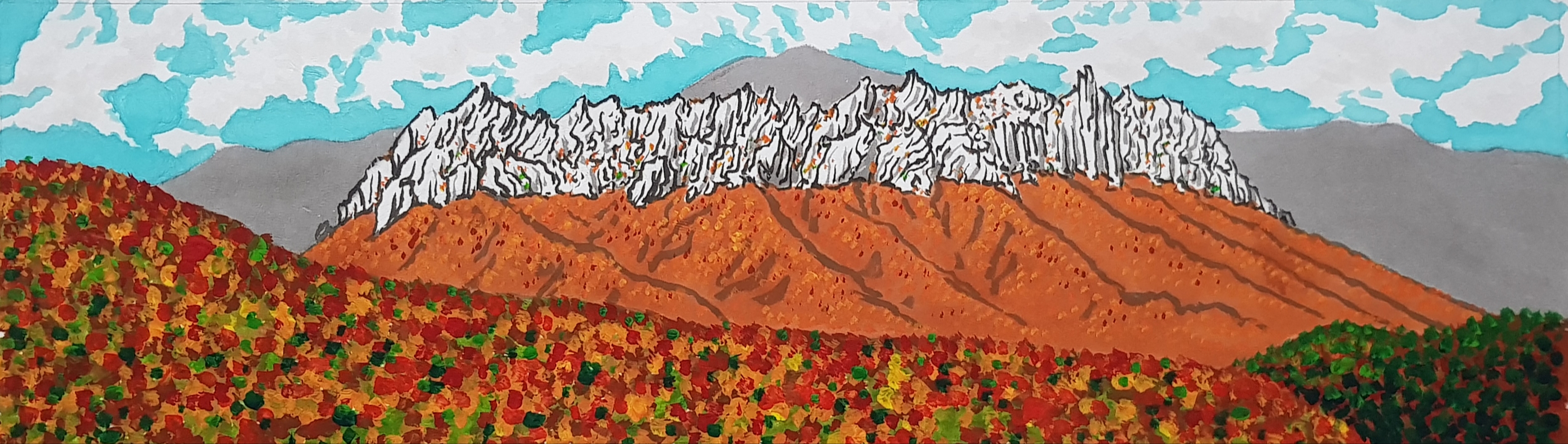
우리는 경사가 40도는 족히 될 법한 가파른 길을 기어오르듯 권금성에 올랐다. 거친 숨을 몰아쉬며 서로 손을 잡아주고, 중간중간 쉬어가며 귤도 나눠 먹고 장난을 치는 사이 서로에 대한 정은 더욱 깊어졌다. 그때 힘들게 올라간 권금성에서 스케치를 하며 가슴에 각인된 설악산의 가을색은 평생 잊을 수 없을 만큼 강렬한 기억으로 남았다. 산을 내려와 우리는 버스를 타고 속초항으로 향했다. 당시 주머니 사정이 넉넉지 못했던 우리는 속초항 어느 작은 식당에 들어가 아주머니와 흥정을 벌였다. 단돈 만 원에 매운탕과 공기밥 두 그릇, 그리고 소주 한 병을 차려 냈는데, 맛도 훌륭했지만 무엇보다 아주 못생긴 생선 이름이 ‘삼세기(삼식이)’라는 게 너무 강렬해 뇌리에서 잊히지 않았다. 가을이 되면 여전히 그때의 추억을 쫓아 삼세기 매운탕을 먹으러 속초를 찾곤 한다. 어쩌면 그 삼세기 매운탕 덕분에 지금의 아내와 결혼할 수 있었던 게 아닐까 싶어, 늘 삼세기에게 고마운 마음을 품고 산다.
이튿날, 속초에서 울산바위를 처음으로 마주했던 순간의 충격은 지금도 생생하다. 상상조차 해보지 못한 압도적인 크기의 바위산이 우리나라에 존재한다는 사실이 믿기지 않았다. 마치 현실 세계가 아닌 듯한 착각마저 들었다. 어떻게 저렇게 거대한 바위들이 인위적으로 쌓아 올린 것처럼 조형적으로 완벽하게 맞물려 있을 수 있을까. 경이로움 그 자체였다. 스케치 여행 중이었으니 당연히 스케치북을 쥐고 있었지만, 감히 그 웅장함을 화폭에 담아낼 엄두조차 내지 못했다. 그저 넋을 잃고 몽롱한 기분으로 한참을 서서 바라볼 뿐이었다.
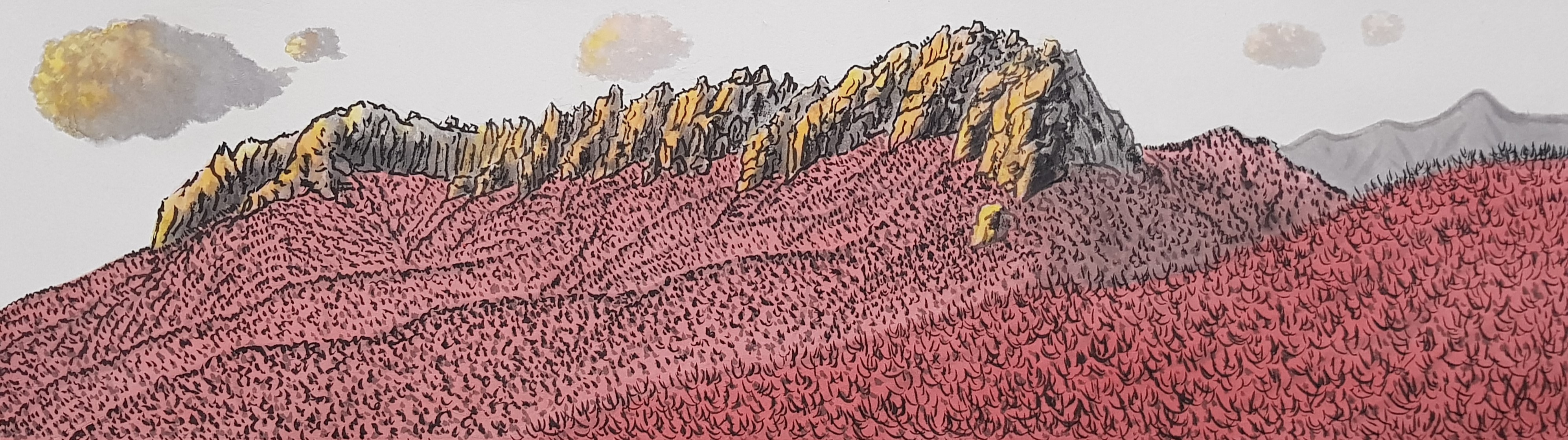
세월이 흘러 울산바위를 정식으로 마주하고 화첩을 펼친 것은 대학원에 재학 중이던 1995년이었다. 지금은 ‘델피노’로 이름이 바뀐 대명콘도 바로 아래에 대학 동기의 작업실이 있었다. 아내와 함께 그 작업실을 방문했다가, 잠시 잊고 지냈던 울산바위의 강렬한 존재감을 다시 깨달았다. 처음 느꼈던 그대로, 울산바위는 여전히 완벽한 조형적 아름다움을 뿜어내고 있었다. 나는 이른 아침, 콘도 앞 도로변에 길다란 화첩을 펼쳐놓고 먹을 갈아 울산바위를 그려 나갔다.
그날 이후 속초나 고성으로 여행을 갈 때면 무조건 울산바위를 그렸다. 여름에는 뜨거운 태양을 피해 그늘을 찾아다니며 화판에 사생을 했고, 겨울에는 온몸을 때리는 칼바람을 피해 작은 개천 구덩이 속으로 들어가 머리만 내민 채 울산바위를 올려다보며 현장 작업을 이어갔다. 가을 단풍에 휩싸인 화려한 모습부터, 온통 꽃으로 뒤덮여 마치 무릉도원을 연상케 하는 풍경까지, 울산바위를 그리는 모든 순간이 내게는 큰 행복이었다.
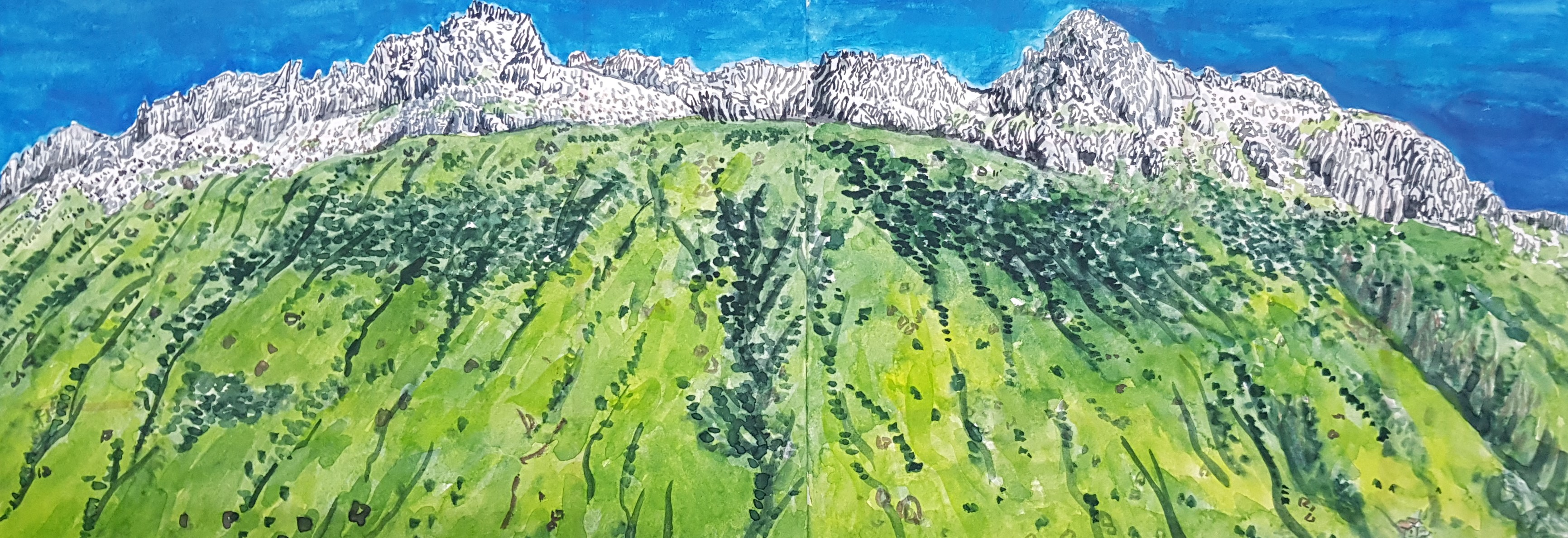
2012년 가족들과 함께 1년간 세계 여행을 떠났을 때도, 울산바위를 닮은 형태의 산을 만나면 유독 반가운 마음에 부지런히 그림으로 남겼다. 그중 네팔 안나푸르나 트래킹 코스의 마낭과 무스탕 사이에서 마주한 돌산이 형태적으로 가장 닮아 있었고, 프랑스 남부 베르동 협곡에서 본 바위산은 특유의 영험한 분위기가 울산바위와 매우 흡사했다. 스위스 남부 체르마트에서 오스트리아로 향하던 길에 만난 멋진 바위산에는 완전히 매료되어, 그 산이 올려다보이는 캠핑장에 하루 머물며 밤낮으로 그림을 그리기도 했다. 이 향수와 영감들이 모여, 지금은 울산바위를 닮은 세계의 거대한 바위산들을 찾아 그리고 이를 한데 모아 개인전을 여는 멋진 계획을 세우고 있다. 닮은 듯 서로 다른 이국의 바위산 풍경을 한자리에서 선보인다면, 관람객들 또한 내가 느꼈던 경이로움과 행복을 고스란히 공유할 수 있으리라 믿는다.
이러한 여정의 연장선으로 속초에 위치한 ‘갤러리 카페 휘’에서 ‘울산바위의 사계’라는 제목으로 전시를 개최하게 되었다. 비록 정식 등록된 미술관은 아니지만, 설악산과 예술을 깊이 사랑하시는 대표님 부부의 따뜻한 배려 덕분에 소중한 자리가 마련되었다. 속초는 훌륭한 관광도시로 도약하고 있지만, 아직 번듯한 갤러리가 부족해 문화적인 아쉬움이 남는 곳이다. 고성과 맞닿아 있으며 향후 금강산으로 향하는 중요한 길목이 될 이 도시에, 앞으로 좋은 미술관과 문화 공간들이 더 많이 생겨나기를 바란다. 그리하여 이곳을 찾는 이들에게 예술적 영감과 진정한 휴식을 주는 문화 도시로 발전하길 소망하며, 이번 전시가 속초 시민들과 관광객들에게 울산바위의 역동적인 매력을 회화로 전하는 뜻깊은 계기가 되기를 기대한다.
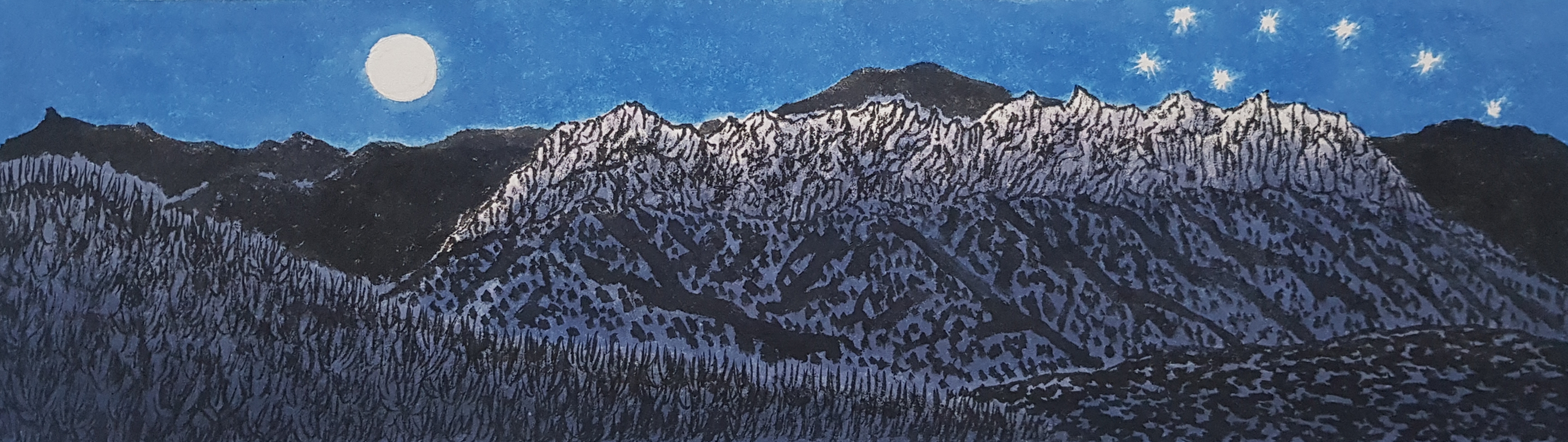
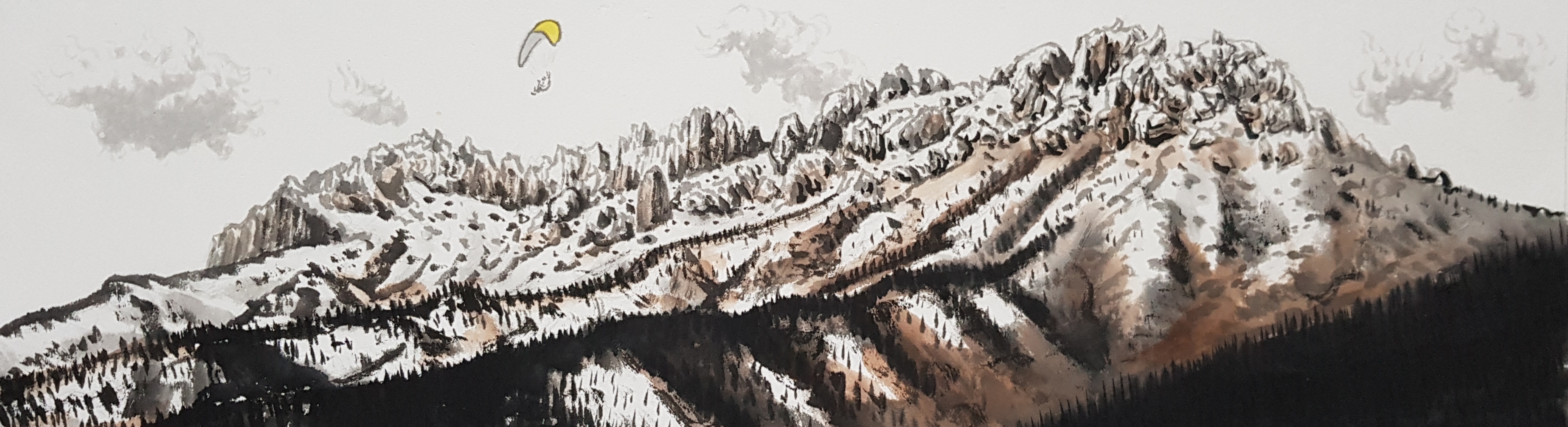
이번 ‘울산바위의 사계’전을 준비하기 위해 지난해부터 올해까지 수없이 속초와 고성을 오갔다. 울산바위는 계절과 날씨, 시간에 따라 시시각각 표정을 바꾸는, 살아 꿈틀거리는 거대한 생명체와 같다. 흰 눈에 덮인 굳건한 능선과 바위의 조화, 봄꽃으로 물든 분홍과 연두 빛의 몽환적인 스펙트럼, 안개와 구름을 품은 여름의 생동감, 그리고 총천연색 단풍으로 타오르는 10월의 장엄함은 보는 것만으로도 황홀경을 선사한다. 울산바위는 우리 마음속에 언제나 그 압도적인 존재감을 각인해 둘 만한, 대한민국이 품은 가장 웅장하고 아름다운 영산(靈山)이다.
프랑스의 인상파 화가 폴 세잔이 ‘생빅트아르 산(Mont Sainte-Victoire)’을 끊임없이 그리며 현대 미술의 새로운 장을 열었듯이, 나는 이 울산바위 연작을 통해 한국 풍경화가 나아가야 할 현대적 방향을 모색해 보고자 한다. 예술가로서 거대한 도전의 대상을 마주하는 것만큼 행복한 일은 없다. 그 치열한 대면의 순간이야말로 내가 살아있음을 가장 강렬하게 느끼는 시간이다. 대상을 온전히 담아내겠다는 염원은 팽팽한 긴장감을 낳고, 초자연적인 에너지를 이끌어내는 고도의 집중력을 요구하기 때문이다. 이 작은 도전이 나를 끊임없이 울산바위 앞으로 이끌어, 지치지 않고 오랫동안 깊이 있는 작품들을 쏟아낼 수 있는 원동력이 되기를 스스로에게 기대해 본다.
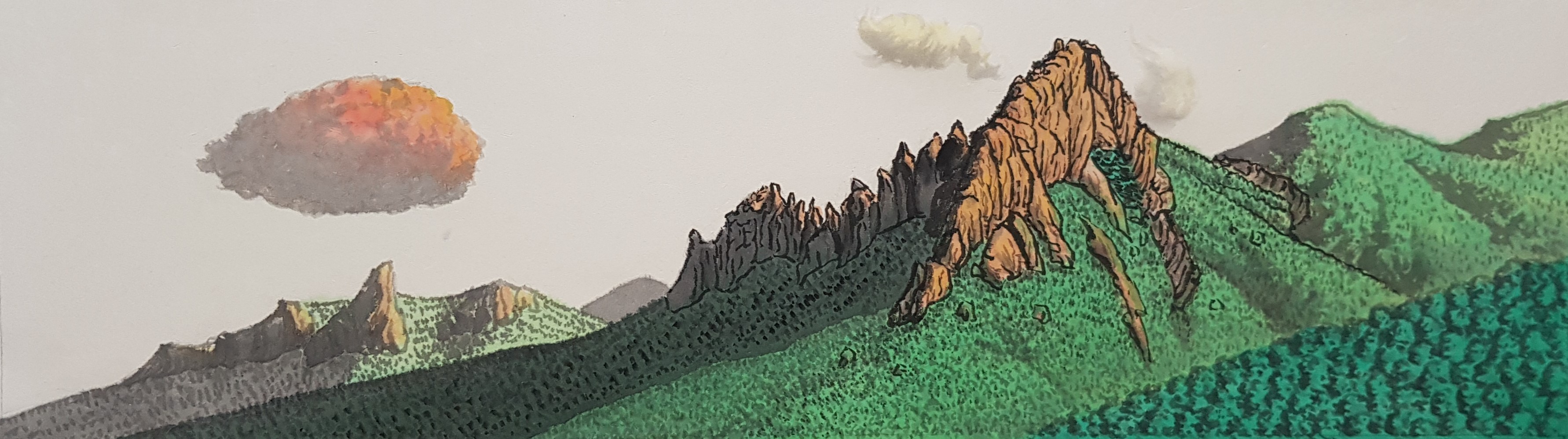
울산바위의 사계를 화폭에 담아내며, 그동안 연재해 왔던 ‘추니박과 함께 걷는 그림여행’도 대단원의 막을 내리게 되었다. 지난 10개월 동안 스케치북을 펼치고 글을 정리하며 참으로 과분한 행복을 누렸다. 지나온 수많은 여정을 그림과 함께 기록할 수 있었음에 가슴 벅찬 뿌듯함과 감사를 느낀다.
앞으로 또 어떤 낯선 길과 풍경이 나를 기다리고 있을지 벌써부터 가슴이 설레고 기분 좋은 긴장감이 감돈다. 독자 여러분의 삶 역시 언제나 아름다운 여행과 함께하기를, 그리고 광활한 자연을 통해 삶의 용기와 따뜻한 위로를 얻으시기를 진심으로 기원하며 감사의 인사를 전한다./추니박
English
Chuni Park’s Painted Journey
Title: New Paths, and My Destined Encounter with Mt. Seorak’s Ulsanbawi Rock
In the autumn of 1990, I set off alone on a sketching trip. It was an impulsive getaway; I had just quarreled with my then-girlfriend—who is now my wife—and simply needed some air to clear my head. Wandering wherever my feet led me, I suddenly found myself standing right in the heart of Seoraksan National Park, staring blankly at the mountain ablaze with brilliant autumn foliage. The scenery was so breathtakingly beautiful that I completely forgot what we had even fought about. I immediately called her and urged her to catch the next express bus to come see this fiery masterpiece. Forgetting our argument entirely, she rushed across the country in a heartbeat at her boyfriend's call.
We practically crawled up the steep 40-degree incline to Gwongeumseong Fortress. Holding hands along the treacherous path, sharing tangerines during brief rests, and teasing each other, our affection grew deeper with every step. The autumn colors of Seorak, which I captured in my sketches at the summit through sheer exhaustion, became permanently etched into our memories—a vivid palette we could never forget. Afterward, we took a bus down to Sokcho Harbor for dinner. Being young artists with light pockets back then, we stumbled into a tiny, weathered eatery and bargained with the owner. For just 10,000 KRW, she served us a steaming pot of fish stew (maeuntang), two bowls of rice, and a bottle of Soju. The stew tasted incredible, but what struck me most was the grotesque appearance of the fish, hilariously named Samseogi (or Samsiki). It was a name impossible to forget. To this day, whenever autumn arrives, we return to Sokcho to seek out Samseogi stew, chasing the ghost of that old memory. In a way, I feel deeply indebted to that ugly little fish; perhaps it was that very meal that sealed our marriage.
The next day brought the moment I first encountered Ulsanbawi Rock in Sokcho. Recalling that exact second, I remember being utterly stunned that a rock mountain of such unimaginable scale existed within Korea. It felt like a landscape detached from reality. How could those monumental boulders be arranged so structurally perfect, as if deliberately stacked by a divine sculptor? It was pure awe. Though I held a sketchbook in my hand, I dared not even dream of drawing it. I simply stood frozen in my tracks, my mind completely numb with admiration.
Years passed, and it wasn't until 1995, during my graduate studies, that I formally confronted Ulsanbawi with an open album. A university colleague had a studio located right beneath the Daemyung Condo (now known as Del Pino). Visiting his studio with my wife, the dormant presence of Ulsanbawi was reawakened within me. Just as I had felt years before, it retained its structurally flawless beauty. Early the next morning, I unrolled a long, panoramic sketchbook on the roadside in front of the resort and began capturing Ulsanbawi with traditional Korean ink.
Since that day, whenever I travel toward Sokcho or Goseong, painting Ulsanbawi has become an absolute ritual. In the scorching summer, I would hunt for patches of shade to sketch en plein air; in the freezing winter, I would huddle inside dry creek beds to shield myself from the howling gales, poking only my head out to look up and paint. Whether wrapping it in the vibrant tapestry of autumn leaves or cloaking it in spring blossoms like a hidden utopian paradise (Mureungdowon), painting Ulsanbawi has always brought me profound happiness.
When I traveled the world for a year with my family in 2012, I eagerly painted any mountain that shared a resemblance to Ulsanbawi. Among them, a rocky peak nestled between Manang and Mustang along Nepal's Annapurna trekking circuit bore the closest structural resemblance. In terms of atmosphere, the majestic rocky gorges of Verdon in southern France felt incredibly similar to the spiritual energy of Ulsanbawi. On the road from Zermatt in southern Switzerland to Austria, I was so captivated by a magnificent rock mountain that I pitched a tent at a campsite overlooking it, spending the entire day painting. Fueled by these experiences, I am currently planning a solo exhibition centered around the world's great rock mountains that mirror Ulsanbawi. Showcasing these similar yet culturally distinct landscapes in one space will, I hope, allow viewers to share the same sense of wonder and joy that I experienced.
As an extension of this lifelong devotion, I am holding an exhibition titled "The Four Seasons of Ulsanbawi" from October 12, 2020, through May 30 of next year at Gallery Cafe Hwi in Sokcho. Although it is not a formally registered museum, the exhibition was made possible through the warmth and generosity of the owners, a couple who deeply love both Mt. Seorak and the arts. Sokcho is rapidly evolving into a prominent tourist destination, yet it still suffers from a cultural drought, lacking proper art galleries. Positioned as a gateway to Goseong and potentially Mt. Geumgang in the future, it is a city of immense geographical and cultural significance. I sincerely hope that more galleries and fine museums take root here, transforming Sokcho and Goseong into a sanctuary of cultural inspiration and rest. In this regard, I hope this exhibition serves as a meaningful bridge, introducing the raw, painted charm of Ulsanbawi to the local community and visitors alike.
To prepare for "The Four Seasons of Ulsanbawi," I have traveled back and forth to Sokcho and Goseong countless times over the past two years. Ulsanbawi is not a static landmark; it is a living, breathing entity that shifts its expression by the hour, responding to the seasons and the weather. The harmony of its powerful ridges blanketed in pristine white snow, the dreamlike pink and soft green hues of spring, the pulsating vitality shrouded in summer mist and clouds, and the majestic grandeur of October when it burns with kaleidoscopic autumn foliage—all of it is utterly enchanting. Ulsanbawi is a truly magnificent and beautiful mountain, possessing a profound presence that everyone should witness and hold in their hearts at least once.
Just as the French Impressionist Paul Cézanne opened a new chapter in modern art through his endless iterations of Mont Sainte-Victoire, I seek to explore a new, contemporary direction for Korean landscape painting through my Ulsanbawi series. For an artist, there is no greater joy than confronting a monumental challenge. Those intense moments of confrontation are when I feel most vibrantly alive. The yearning to fully encapsulate nature breeds a taut tension, demanding a supernatural focus and energy. I look forward to this small challenge continually guiding me back to Ulsanbawi, serving as the driving force that allows me to produce deep, enduring works for a long time to come without ever growing weary.
With the completion of these seasonal depictions of Ulsanbawi, my long-running column, "Chuni Park’s Painted Journey," also comes to its final chapter. Over the past ten months, organizing my sketchbooks and thoughts has brought me immense, humbling joy. I feel a deep sense of pride and gratitude that I was able to document so many of my life's journeys alongside my art.
My heart is already racing with a pleasant tension, wondering what unfamiliar roads and foreign landscapes lie ahead waiting for me. I wish to express my deepest gratitude to all of you, hoping that your lives are always accompanied by beautiful journeys, and that you find boundless courage and warm consolation through the great embrace of nature./Chuni Park