
Forest of Contemplation / 2024 Exhibition Essay
2026-06-05
사유의 숲
숲을 그리는 일
나에게 숲을 그리는 일이 마치 피할 수 없는 의무처럼 다가왔던 때가 있었다. 2016년 2월, 겨울의 끝자락에 시작된 그 여정은 이듬해인 2017년 11월 가을이 저물 때까지 꼬박 2년간 지속되었다.
그 시절 나는 아침에 눈을 뜨면 두꺼운 3합 한지를 붙인 50호 화판(172×72cm)을 들고 작업실을 에워싼 야산의 숲으로 향했다. 그리고 온종일 그곳에서 그림을 그렸다. 마침 이웃에 살던 '탁형'이라는 분이 거의 1년 동안 내 작업에 동행해 주었다. 우리는 화구를 짊어진 채 산에 올라 그날의 주제에 맞는 장소를 찾아 이리저리 숲을 헤맸고, 싸 들고 간 도시락을 먹거나 막걸리와 캔 맥주를 나누며 시간을 보냈다. 탁형이 숲에서 나를 위해 기꺼이 모델을 자처해 준 것이 백 번은 족히 넘을 테니, 내 숲 그림이 도약하는 데 가장 큰 공을 세운 일등 공신이라 해도 과언이 아니다. 당시 '숲' 시리즈의 핵심은 홀로 남겨진 숲에서 자신을 찾아가는 인간상을 표현하는 데 있었기에, 나는 그날그날 일기를 쓰듯 그에게 인물의 포즈를 부탁하곤 했다.
숲은 인간의 외로움과 슬픔, 나약함과 좌절감을 묵묵히 보듬어주고 용기를 불어넣어 주는 강인한 어머니의 품과 같은 곳이다. 처음에는 숲과 인간의 관계를 어떻게든 인문학적 관점에서 해석해 보려 애썼고, 숲의 진실된 외형을 담아내기 위해 최선을 다했다. 하지만 작업의 양이 쌓이고 산에서 머무는 시간이 길어지면서 자연스럽게 숲과 나는 하나가 되었다. 억지로 무언가를 표현하려 하지 않아도, 숲속 나무와 인물의 형상을 순수하게 관찰하고 그리는 것만으로 이미 내 마음이 그 화면에 투영되고 있음을 깨닫게 된 것이다.
보통 낮에는 숲에서 사생을 하고 저녁에는 작업실로 돌아와 완성도를 높였는데, 현장의 생생한 호흡이 더 필요할 때면 다음 날 같은 장소를 다시 찾아 보충 작업을 이어갔다. 숲을 그리는 일은 오랜 시간의 깊은 관찰을 요구했다. 계절의 변화에 따라 나무와 나무 사이에 생겨나는 공간, 가지와 가지가 맺고 있는 유기적인 관계를 온전히 이해해야만 했다. 그리고 자연의 섭리를 이해하는 것만큼이나 내 안의 내면을 들여다보는 일 또한 중요했다. 고요한 숲에서 작업을 하다 보면 지나온 인생의 흔적들과 온갖 세상사가 주마등처럼 스쳐 지나갔다. 그렇기에 나에게 숲에서 그림을 그리는 행위는 스스로를 비워내는 수행의 과정이기도 했다.
수행자의 마음: 치유의 숲과 침묵의 숲
치열한 인내의 시간을 거쳐 2017년 11월이 되자 130여 점에 달하는 숲 그림이 완성되었다. 나는 이 연작에 ‘치유의 숲’이라는 이름을 붙였다. 이는 누군가를 치유하겠다는 거창한 의도라기보다, 온 몸을 던진 작업을 통해 나 자신이 먼저 치유되었기에, 이 그림을 마주할 이들에게도 그 선한 회복의 에너지가 전달되기를 바라는 마음의 발현이었다.
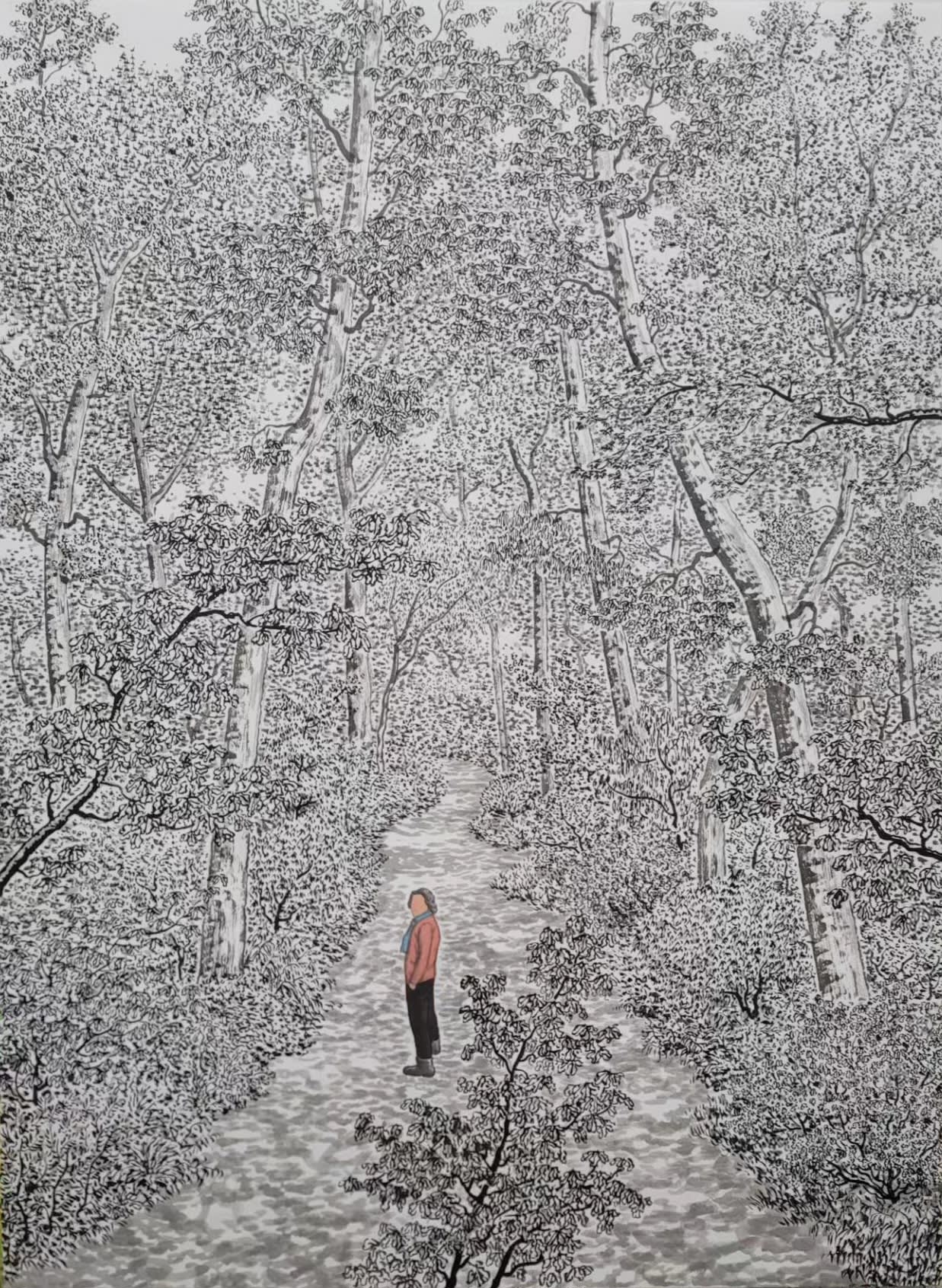
당시 2년간 현장에서 작업을 이어가며, 한편으로는 오직 흑백의 수묵으로만 그려내는 대형 숲 작업을 병행했다. 물기가 완전히 빠져나간 메마른 겨울 숲, 그리고 새순이 막 돋아나는 이른 봄의 적막한 숲속에 자화상이 멍하니 서 있는 구도였다. 이때부터 본격화된 '자화상이 있는 숲'은 각박한 현실에 홀로 던져진 인간이 고뇌와 고독을 통과하며 자신의 정체성을 찾아가는 과정을 의미했기에, 시리즈의 제목을 ‘침묵의 숲’이라 명명했다.
‘침묵의 숲’은 나 자신 외에는 그 어떤 인간의 흔적도 느껴지지 않도록 철저히 쓸쓸하게 묘사되었다. 여기에는 원말사대(元末四大) 중 한 명이었던 화가 예찬(倪瓚)이 메마르고 황량한 산수를 그리며 자신의 외롭고 고독한 심경을 담담히 이겨내고자 했던 것처럼, 나만의 예술적 결기가 담겨 있었다. 나는 숲에서 오랜 시간을 홀로 보내며, 비로소 스스로와 깊이 대화할 수 있는 내면의 힘을 얻었고, 나 자신을 온전히 품어줄 수 있는 작은 정신적 공간을 구축할 수 있었다.
적막한 공간, 그리고 사유의 숲
화폭 속 나의 숲은 따뜻하다. 그러나 동시에 자연의 미세한 숨소리나 새소리, 바람소리마저 모두 삼켜버린 듯한 절대적인 적막함과 고요함을 품고 있다. 내가 말하는 적막과 고요는 적막강산의 쓸쓸함이 아니라, 우리가 무언가에 극도로 집중했을 때 도달하게 되는 초월적인 몰입의 상태를 뜻한다. 숲에서 그림을 그리며 경험했던, 마치 블랙홀이나 무중력의 진공 상태와도 같은 절대적 고요의 공간이다. 그 안에서 나는 더 이상 슬픔도, 아픔도, 외로움도, 두려움도 느낄 필요가 없다. 그곳은 내가 꿈꾸는 이상의 세계이자, 예술을 통해 도달하고자 하는 절대적인 염원이 빚어낸 사유(思惟)의 공간이기 때문이다. 나는 그 안에서 완전한 정신적 해방을 맞이하며, 갈망해 왔던 진정한 자유를 탐닉한다.
나는 이 고요하고 적막한 숲에 단 한 사람의 인물을 그려 넣거나(그것은 나 자신이기도 하고, 아내나 아들, 혹은 어머니 같은 나의 가족들이다), 혹은 내가 오랫동안 사용해 온 붉은 소파를 덩그러니 배치한다. 이 두 가지 오브제는 내 존재의 근원을 지탱하는 중요한 정신적 매개체들이다. 이목구비가 지워진 인물, 그리고 시간의 흐름이 정지된 숲 한가운데 놓인 붉은 소파는 내 머릿속에 존재하는 유일한 숲의 주인공들이다.
‘사유의 숲’은 치열한 육체적 노동을 통해 파생된 정신적·심리적 경험을 토대로 구축된 공간이다. 그러나 이 숲은 동시에 우리 모두를 위한 숲이기도 하다. 누구나 타인의 시선과 간섭에서 벗어나 완전한 고요 속에서 오롯이 자기 자신으로 존재할 수 있는 나만의 숲을 꿈꾸기 때문이다.
우리는 명상이란 곧 생각을 비워내는 상태에 이르는 것임을 잘 알고 있지만, 치열한 수행 없이는 그 진정한 명상의 공간에 진입하기 어렵다. 어쩌면 나는 '치열하게 그리기'라는 화두를 통해 나만의 명상에 이르는 길을 찾고, 나만의 성소를 꿈꾸고 있는지도 모른다. 그러나 내가 이 숲 작업을 통해 도달하고자 하는 궁극적인 지향점은 명확하다. 내가 창조한 이 고요한 숲 안에서, 사람들이 지친 삶을 잠시 내려놓고 온전히 자신을 치유하며 따뜻한 위로를 얻어가는 것이다.
/추니박
English
Forest of Contemplation
The Act of Painting the Forest
There was a time when painting the forest felt less like a choice and more like an inescapable calling. This artistic pilgrimage began in the fading days of winter in February 2016 and consumed me for two full years, concluding as autumn drew to a close in November 2017.
During those days, I would wake up each morning, take a large 50-ho (172×72 cm) wooden panel stretched with thick, three-ply traditional Korean mulberry paper (samhap hanji), and head into the wild woods surrounding my studio. There, I would spend the entire day painting. Fortune favored me with a neighbor, whom I fondly call Tak-hyeong (Brother Tak), who accompanied me on this daily ritual for nearly a year. Together, we trekked up the mountain with our heavy gear, wandering the dense woods to find the perfect spot that matched the day’s conceptual vision. We shared packed lunches and passed the time over bowls of makgeolli (rice wine) or cans of cold beer. He willingly stood as my model in the wilderness more than a hundred times. It is no exaggeration to say he was the greatest contributor to the evolution of my forest paintings. Because the overarching theme of the Forest series was the human figure seeking the true self in isolation, I asked him to pose for me as if I were writing a visual diary day by day.
The forest functions as the embrace of a resilient mother—one that silently cradles human loneliness, sorrow, frailty, and despair, breathing renewed courage into the soul. When I first began this series, I strove to interpret the relationship between nature and humanity through a humanistic lens, doing my utmost to capture the objective truth of the forest's appearance. However, as the volume of work mounted and the hours spent in the mountains lengthened, the boundary between the forest and myself naturally dissolved. I came to realize that I did not need to force a narrative; merely observing and purely rendering the trees and the figures allowed my own inner landscape to project itself effortlessly onto the paper.
My routine consisted of sketching on-site during the day and refining the pieces in my studio at night. Whenever a piece demanded a more raw, immediate presence, I would return to the exact same spot the following day. Painting the forest required immense periods of deep observation. I had to understand the shifting negative space between the trees and the organic, interwoven relationships of branches as the seasons turned. Yet, looking inward to examine my own soul was just as crucial as understanding the laws of nature. Working in the isolation of the woods, the fragments of my past and the complexities of worldly life flashed before me like a kaleidoscope. Thus, for me, painting in the forest became an ascetic ritual of emptying myself.
An Ascetic Mindset: The Forest of Healing and The Forest of Silence
By November 2017, through this grueling process of patience and labor, I had amassed over 130 completed forest paintings. I titled this specific body of work "The Forest of Healing." This title was not born from a grandiose intent to heal others; rather, it reflected the reality that I had been healed myself through this fierce, agonizing labor. It carried my earnest hope that this restorative energy would be transmitted to those who stood before the finished works.
Parallel to these on-site color paintings, I also engaged in creating monumental forest landscapes rendered exclusively in monochrome ink (sumuk). These works featured a self-portrait standing amidst the desolate, moistureless woods of late winter or the silent, stark forests of early spring just as the first buds began to break. This theme—a lone self-portrait within the wilderness—signified a solitary human being thrown into a harsh world, navigating anguish and isolation to uncover their true identity. Consequently, I named this monochrome sequence "The Forest of Silence."
"The Forest of Silence" was depicted with a rigorous, uncompromising bleakness, devoid of any human trace other than my own. This approach embodied my own artistic resolve, mirroring the spirit of Ni Zan—one of the Four Masters of the late Yuan Dynasty—who sought to transcend his profound loneliness by painting dry, desolate landscapes. By spending endless hours in the woods, I forged an inner strength to converse deeply with my true self, carving out a small, sacred internal sanctuary to cradle my own soul.
A Serene Space, and the Forest of Contemplation
The forest I paint is inherently warm. Yet, it simultaneously harbors an absolute stillness and tranquility, as if it has swallowed every external sound—the chirping of birds, the rustle of wildlife, and the whistling of the wind. The silence I refer to is not the emptiness of desolation, but rather a state of transcendental immersion—the profound vacuum one enters when completely absorbed in something. It is a forest of absolute quietude, existing in a weightless, vacuum-like state akin to a black hole, which I intimately experienced while painting on-site. Within that space, I feel no need to experience sorrow, pain, loneliness, alienation, or fear. It is simply an ideal world of my own dreaming, a space of pure contemplation brought forth by an absolute artistic aspiration. Within it, I encounter complete spiritual liberation and indulge in the absolute mental freedom I have always craved.
Into this quiet, desolate forest, I place a single human figure (which represents myself, my wife, my son, or my mother) or a stark red sofa that I have owned and used for a long time. These two motifs serve as crucial spiritual anchors that sustain my existence. The faceless figures and the crimson sofa, left abandoned in a forest where time has lost its meaning, are the sole protagonists of the landscapes inside my mind.
"The Forest of Contemplation" is a sanctuary constructed upon the spiritual and psychological experiences derived from intense physical labor. Yet, this forest belongs to everyone. We all harbor a quiet dream of finding our own forest—a place of absolute stillness, free from the judgment and interference of the world, where we can exist purely as ourselves.
While we understand that meditation is ultimately the act of reaching a state free of thought, entering that true meditative space is impossible without relentless effort. Perhaps I am dreaming of my own path to that meditative state, my own sacred sanctuary, through the single-minded focus of "fierce painting." Ultimately, however, the final destination of my artistic journey remains simple: I hope that within the quiet, painted forests I have created, people can lay down the heavy burdens of life, heal their wounded spirits, and find a profound, warm consolation./ Chuni Park